

Every year, SAP Sapphire offers a view into where enterprise technology is heading. Historically, many of those announcements represented long-term strategy and future-state vision.
This year was different.
Sapphire 2026 was not centered on hypothetical AI capabilities or distant roadmaps. SAP demonstrated that enterprise AI is already becoming operational, scalable, and embedded into real business processes today.
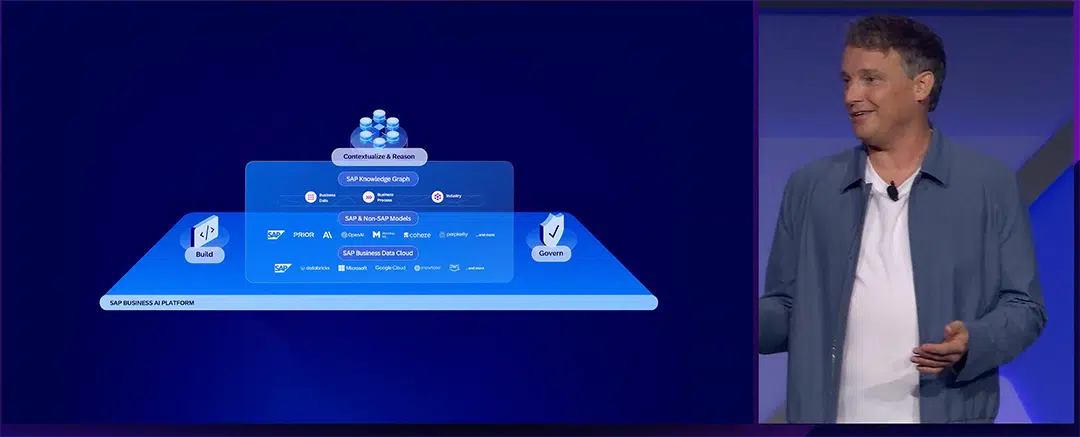
At the center of that strategy is SAP Business AI Platform.
The biggest takeaway from Sapphire was not simply the number of AI agents SAP announced. It was SAP’s broader approach to solving the core challenge that has limited enterprise AI adoption: disconnected data, fragmented processes, and the lack of governance.
 Source: SAP
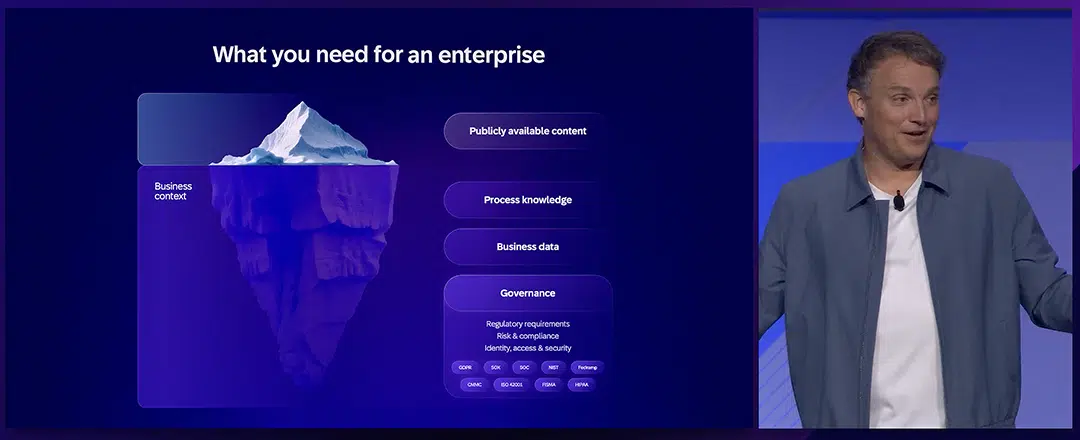
SAP’s message: Enterprise AI cannot operate effectively without business context.
Consumer AI can work from publicly available information. Enterprise AI requires far more:
- Business data
- Process knowledge
- Organizational context
- Security and authorization
- Regulatory compliance
- Explainability and governance
That distinction appeared repeatedly throughout Sapphire presentations and demos.
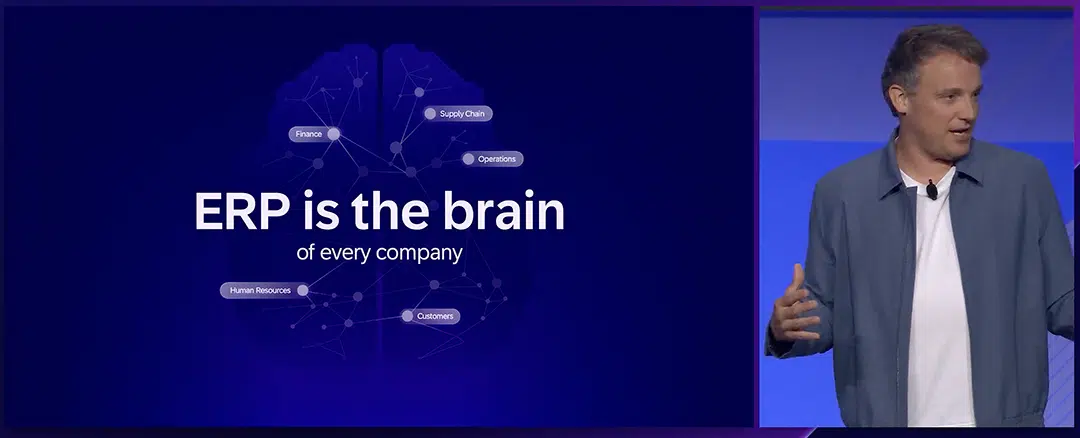
SAP is positioning ERP as the operational brain of the enterprise because ERP systems already contain the processes, relationships, and transactional data that businesses run on every day. Finance, supply chain, procurement, HR, sales, operations, and customer data are no longer being treated as isolated systems. SAP is building a framework where AI agents can securely access and act across those domains in a governed way.
 Source: SAP
This is where SAP Business AI Platform becomes strategically important.
The platform combines:
- SAP business applications
- SAP Knowledge Graph
- SAP and non-SAP AI models
- Enterprise data platforms
- Governance and compliance controls
The goal is not simply to generate answers. The goal is to enable AI agents to reason within enterprise processes using trusted business data and governed business rules.
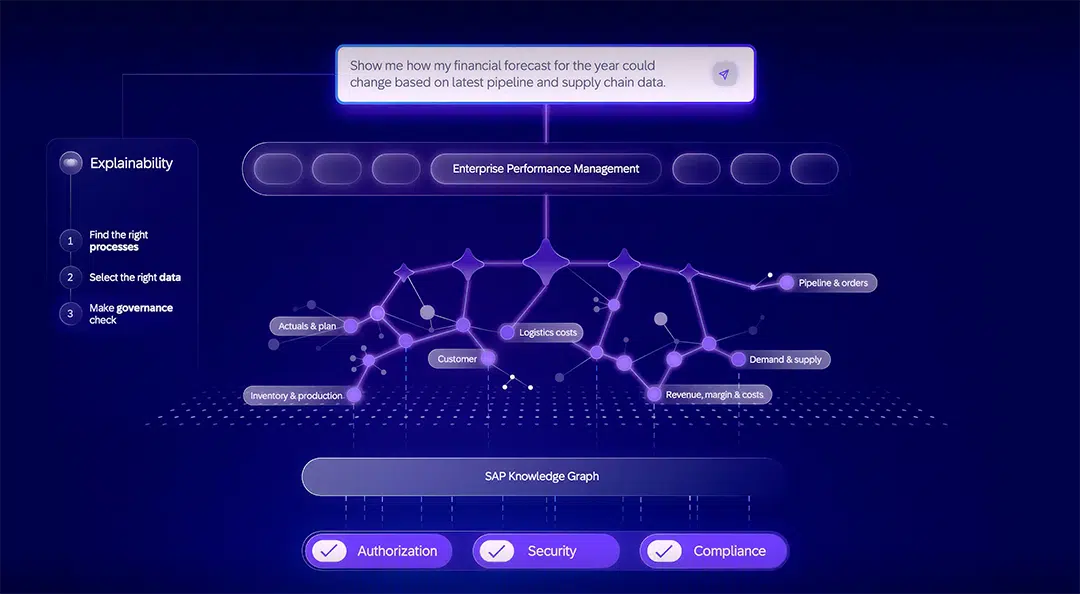
One of the most important concepts introduced at Sapphire was the SAP Knowledge Graph. SAP demonstrated how it connects business data, process relationships, industry context, and operational dependencies to provide AI systems with contextual understanding of how the enterprise works.
SAP also emphasized explainability throughout the event. Enterprise leaders need to understand:
- which processes AI is accessing
- which data sources are being used
- how recommendations are generated
- whether governance policies are being enforced
That focus on explainability, authorization, compliance, and security is what separates enterprise AI infrastructure from consumer AI experiences.
 Source: SAP
SAP is no longer talking about AI as an isolated assistant layered onto existing systems. The company is building an enterprise-wide AI operating model where agents can interact across applications, processes, and data domains with governance built into the foundation.
Perhaps the most significant shift was the scale of what already exists. SAP highlighted more than 600 operational AI agents available across business functions today. That changes the conversation from experimentation to execution.
The direction is becoming increasingly clear.
Enterprise AI will not be won by standalone copilots or disconnected automation tools. It will be won by platforms capable of combining enterprise data, business processes, governance, and contextual intelligence at scale.
Sapphire 2026 made it clear that SAP intends for SAP Business AI Platform to become that foundation.
 Source: SAP